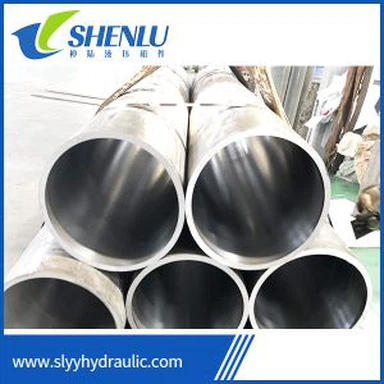
How do honed steel tubes resist corrosion
Jul 08, 2025
Honed steel tubes resist corrosion through multiple means, mainly relying on material characteristics and surface-treatment technologies. The specific methods are as follows:
Material - level anti - corrosion
Alloying elements: The steel used to make honed steel tubes often contains alloying elements such as chromium, nickel, and molybdenum. Chromium can react with oxygen in the air to form a dense chromium-rich oxide film on the surface of the steel tube, which acts as a barrier to prevent the intrusion of corrosive media. Nickel can improve the overall corrosion resistance of the steel, especially in some acidic and alkaline environments. Molybdenum can enhance the pitting corrosion resistance of the steel.
Surface - treatment anti-corrosion
Honing - process - process-induced dense surface: The honing process not only improves the surface finish and dimensional accuracy of the steel tube but also makes the surface microstructure denser. This dense structure is not conducive to the penetration of corrosive substances, thereby increasing the corrosion resistance of the steel tube.
Additional surface coatings: Various surface-coating technologies can be used to further improve the corrosion resistance of honed steel tubes. Common coatings include zinc-based coatings, epoxy coatings, and ceramic coatings. Zinc-based coatings protect the steel tube through sacrificial anodes. Epoxy coatings and ceramic coatings form a physical barrier on the surface of the steel tube, isolating the steel from the corrosive environment.
If you need High-Quality honed steel tubes, please contact Shenlu for further questions.