

What is the purpose of the end caps in a hydraulic cylinder?
Dec 15, 2025
As a seasoned supplier in the hydraulic cylinder industry, I've witnessed the transformative impact of these essential components across a wide range of applications. Hydraulic cylinders are the unsung heroes in countless industrial processes, construction sites, and automotive systems, translating fluid power into linear mechanical force with remarkable efficiency. Today, I'd like to focus on a crucial yet often overlooked part of hydraulic cylinders: the end caps.
Understanding the Basics of Hydraulic Cylinders
Before delving into the purpose of end caps, it's essential to grasp the basic structure and operation of hydraulic cylinders. A hydraulic cylinder consists of a barrel, a piston, a piston rod, and end caps. The barrel serves as the housing, containing the piston and the hydraulic fluid. The piston divides the interior of the barrel into two chambers, and the piston rod extends through one end of the cylinder, transmitting the force generated by the movement of the piston.
There are two primary types of hydraulic cylinders: Single Acting Hydraulic Cylinder and Double Acting Hydraulic Cylinder. In a single-acting cylinder, hydraulic fluid is supplied to only one side of the piston, creating force in one direction. The return stroke is typically achieved through external forces, such as gravity or a spring. In contrast, a double-acting cylinder uses hydraulic fluid on both sides of the piston, allowing for force generation in both the forward and reverse directions.
The Purpose of End Caps
End caps are integral to the functionality and performance of hydraulic cylinders. They serve several critical purposes that contribute to the overall efficiency and reliability of the cylinder.
Sealing the Cylinder
One of the primary functions of end caps is to seal the hydraulic cylinder, preventing the leakage of hydraulic fluid. Hydraulic systems operate under high pressure, and even a small leak can lead to a significant loss of efficiency and potential damage to the system. End caps are designed to create a tight seal between the barrel and the outside environment, ensuring that the hydraulic fluid remains within the cylinder.
This sealing function is achieved through the use of gaskets or O-rings, which are placed between the end cap and the barrel. These sealing elements are made from materials that are resistant to the hydraulic fluid and can withstand the high pressures and temperatures encountered in hydraulic systems. By maintaining a proper seal, end caps help to prevent contamination of the hydraulic fluid, which can cause wear and tear on the internal components of the cylinder.
Supporting the Piston Rod
End caps also provide support for the piston rod as it extends and retracts from the cylinder. The piston rod is subjected to significant forces during operation, and without proper support, it can bend or break, leading to a failure of the hydraulic system. End caps are designed with bearings or bushings that guide the piston rod and ensure that it moves smoothly and accurately.
These support elements help to reduce friction between the piston rod and the end cap, minimizing wear and tear on both components. They also help to maintain the alignment of the piston rod, ensuring that it remains centered within the cylinder and does not cause any damage to the internal components.
Mounting the Cylinder
End caps are used to mount the hydraulic cylinder to the equipment or machinery in which it is used. They are typically designed with mounting holes or flanges that allow the cylinder to be securely attached to the mounting surface. The mounting method used depends on the specific application and the requirements of the equipment.
Proper mounting is essential for the safe and efficient operation of the hydraulic cylinder. It ensures that the cylinder is aligned correctly and can withstand the forces generated during operation. End caps play a crucial role in this process, providing a stable and secure connection between the cylinder and the equipment.
Protecting the Internal Components
End caps also help to protect the internal components of the hydraulic cylinder from external damage. They act as a barrier, preventing dirt, dust, and other contaminants from entering the cylinder and causing damage to the piston, piston rod, or other internal components.
In addition to protecting against contaminants, end caps also provide some level of protection against physical damage. They can help to absorb shocks and vibrations, reducing the stress on the internal components of the cylinder and extending its service life.
Types of End Caps
There are several different types of end caps available, each designed to meet the specific requirements of different applications. Some of the most common types of end caps include:
Threaded End Caps
Threaded end caps are the most basic type of end cap and are commonly used in small to medium-sized hydraulic cylinders. They are designed to be screwed onto the end of the barrel, creating a tight seal. Threaded end caps are easy to install and remove, making them ideal for applications where regular maintenance or repair is required.
Welded End Caps
Welded end caps are permanently attached to the barrel of the hydraulic cylinder using welding techniques. They provide a strong and leak-proof seal, making them suitable for high-pressure applications. Welded end caps are also more resistant to vibration and shock, making them ideal for use in heavy machinery and equipment.
Flanged End Caps
Flanged end caps are designed with a flange that extends around the perimeter of the end cap. The flange is used to bolt the end cap to the barrel, creating a secure and leak-proof connection. Flanged end caps are commonly used in large-scale hydraulic cylinders and applications where a high level of strength and durability is required.
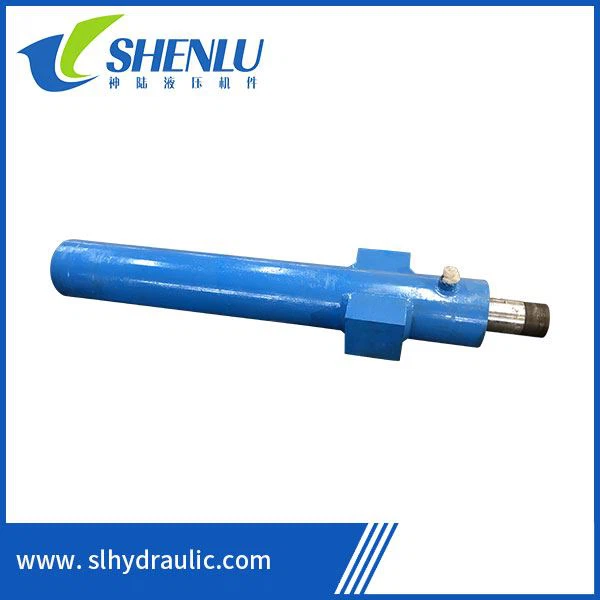

Tie Rod End Caps
Tie rod end caps are used in hydraulic cylinders that are held together by tie rods. The tie rods extend through the end caps and are tightened to hold the cylinder together. Tie rod end caps are commonly used in applications where the cylinder needs to be disassembled for maintenance or repair.
The Importance of Quality End Caps
The quality of the end caps used in a hydraulic cylinder is crucial to its performance and reliability. Inferior end caps can lead to leaks, poor support for the piston rod, and inadequate protection of the internal components. This can result in reduced efficiency, increased maintenance costs, and even system failures.
As a hydraulic cylinder supplier, we understand the importance of using high-quality end caps in our products. We source our end caps from reputable manufacturers who use the latest manufacturing techniques and materials to ensure their quality and performance. Our end caps are designed to meet or exceed the industry standards, providing our customers with reliable and long-lasting hydraulic cylinders.
Customization Options
At our company, we also offer customization options for end caps to meet the specific requirements of our customers. We understand that different applications may require different types of end caps, and we are committed to providing our customers with the solutions they need.
Whether you need a specific size, shape, or material for your end caps, our team of experts can work with you to design and manufacture a custom solution that meets your needs. We use state-of-the-art manufacturing equipment and techniques to ensure the precision and quality of our custom end caps.
Contact Us for Your Hydraulic Cylinder Needs
If you are in the market for high-quality hydraulic cylinders, including Large Scale Hydraulic Cylinders, we invite you to contact us. Our team of experienced professionals is ready to assist you in selecting the right hydraulic cylinder and end caps for your application.
We offer a wide range of hydraulic cylinders and related products, all backed by our commitment to quality and customer service. Whether you need a standard cylinder or a custom solution, we have the expertise and resources to meet your needs. Contact us today to discuss your requirements and get a quote.
References
- "Hydraulic Cylinders: Design and Application" by James Fitch
- "Fluid Power Technology" by William anthony Schulte
- Industry standards and guidelines for hydraulic cylinder manufacturing